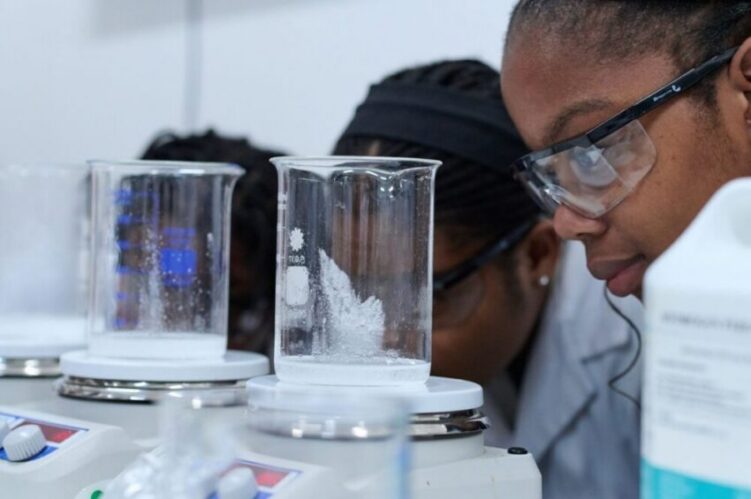
Science exists primarily in textbooks and on chalkboards for many high school learners. When preparing for final exams, learners need to know what happens when theory turns into an experiment. However, a laboratory is not an easy resource to come by, even for well-resourced education systems globally.
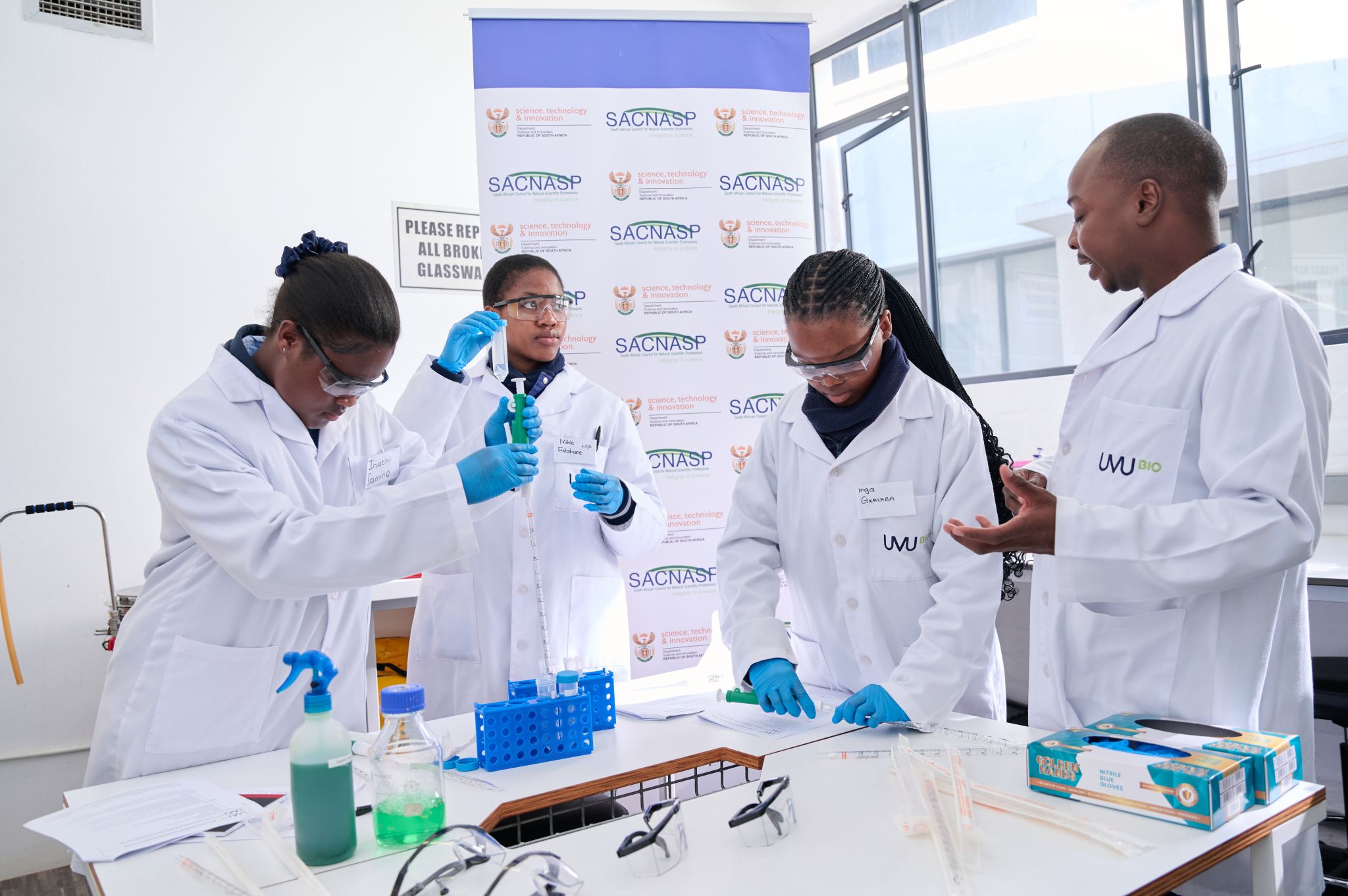
Closing this systemic access gap requires collaborative effort. To bring the laboratory directly to students who need it most, UVU BIO conceptualized and implemented the SheSTEAM CAPS Practical Readiness Intervention. The initiative was delivered in partnership with the Western Cape Education Department (WCED) and the South African Council for Natural Scientific Professions (SACNASP). Over three days, the UVU Bio Skills Centre welcomed 103 Grade 12 girls from high schools in Mfuleni, Manzomthambo, Sophumelela, Spine Road, Isilimela and Thandokhulu.
Building Confidence Before Matric Exams

From the start, learners were engaged and curious. Many arrived with a strong grasp of the theory they had learned at school and were excited to see those concepts take place in a laboratory. Questions, discussion and hands-on participation became central to the learning experience as they worked through practicals in Chemistry, Life Sciences and Physical Sciences.
According to Tristan Jones, Bioprocess Technician and Skills Development Facilitator at UVU Bio, learners eagerly took on practical tasks, quickly learning how to use the equipment and asking questions when they encountered unfamiliar concepts.
One conversation particularly stood out. While extracting DNA from bananas, Tristan explained the relationship between human and banana DNA, which led to a wider discussion about evolution, mutation and human development. The learners had not yet covered evolution in their schoolwork, but this topic intrigued them and made them interested in studying STEM. For Tristan, this exchange showed that the learners were already thinking beyond what they were learning on the day.
Fitted with laboratory coats and safety equipment, they worked through facilitator-led practical sessions designed around the CAPS curriculum. They used dedicated practical manuals, allowing them to practise the scientific processes they will encounter in their final assessments. The sessions gave them an opportunity to engage with the detail of practical science.
Starting the STEM Journey Earlier
Sometimes, the first step towards a future in STEM is an opportunity to step into the laboratory.
Throughout the year, UVU BIO delivers STEM and biotechnology skills programmes for post-matriculant learners, including those with degrees and diplomas, in South Africa and Rwanda. SheSTEAM brings this practical approach into the pipeline earlier, giving Grade 12 learners an opportunity to experience laboratory work before they make decisions about their career choices.
“By exposing Grade 12 learners to real laboratory environments, we are helping to build interest and confidence in STEM before they enter tertiary education or begin making decisions about future career pathways,” says Uraisha Magan, Skills Development Manager and Specialist Scientist at UVU BIO.
One of UVU BIO’s objectives is to create opportunities for under-served communities to access practical, skills-focused learning in STEM.
What Collaboration Makes Possible
SheSTEAM was made possible through a collaborative partnership. SACNASP provided funding and transport, UVU BIO provided the laboratory environment, practical resources and facilitation, while WCED connected the programme with participating learners and schools.
Together, the partners created an opportunity for 103 young girls to experience science in a way that goes beyond the textbooks. As they prepare for their final exams, they will carry the memory of the lab, the confidence of hands-on experience, and a clearer sense of what science can look like from the inside.
If your organisation would like to collaborate on programmes like SheSTEAM, email info@uvubio.com to explore how we can work together.


